During this team project for INEG 21003 we used Microsoft Excel to explore how several factors relate to performance and behavior in a controlled cognitive task. Our dataset included measures such as caffeine concentration, hours of sleep, environmental noise level, reaction time, and focus scores across days of the trial and time since last meal. We created four main visualizations: a scatter plot, a histogram, a time series plot, and a scatter plot with a behavioral predictor to answer specific questions about these relationships and to practice cleaning formatting and graphing data in Excel.
Caffeine Concentration vs Hours of Sleep
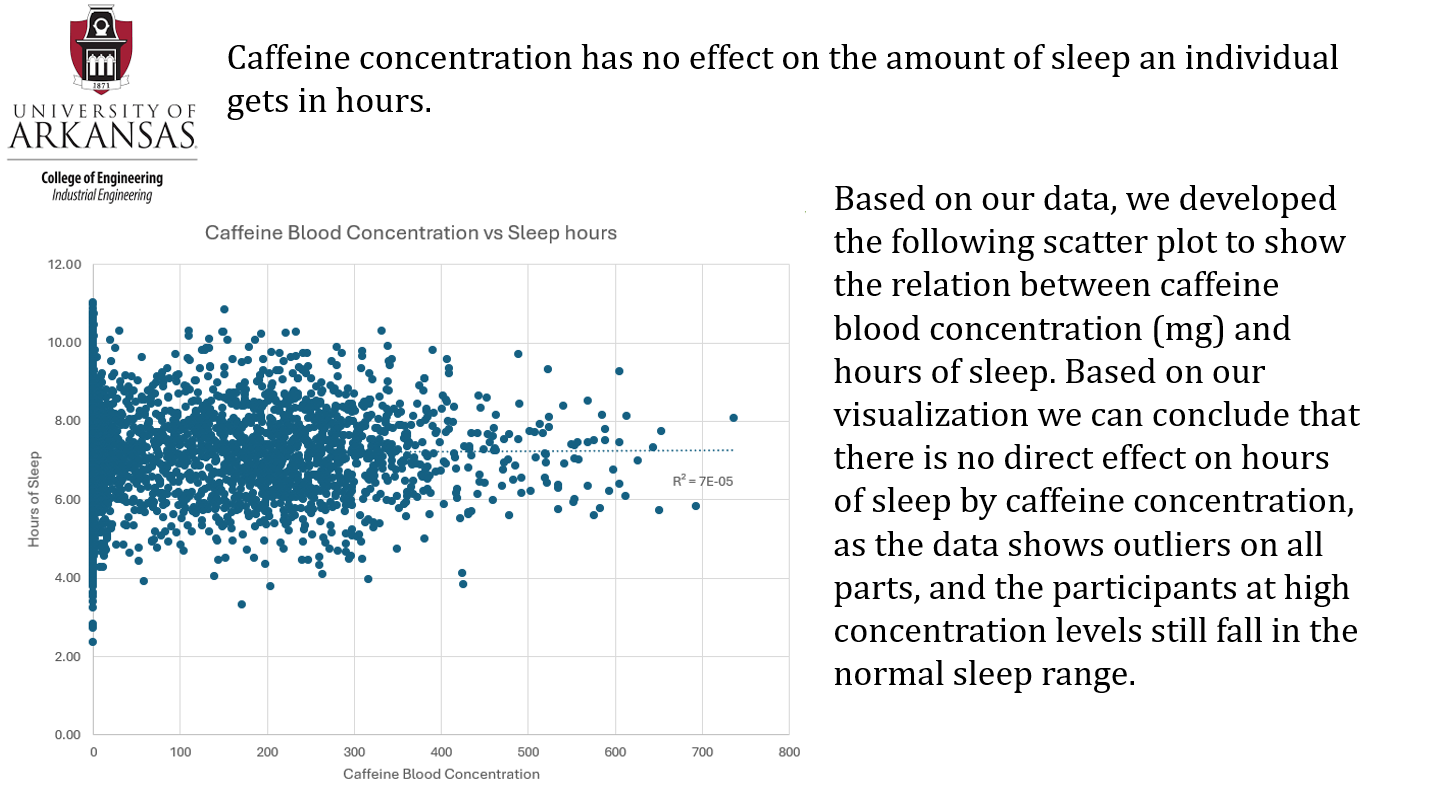
Scatter plot of caffeine concentration versus hours of sleep.
Question.
Does caffeine blood concentration affect how many hours participants sleep?
Why this question is interesting.
Caffeine and sleep are everyday issues for students and working professionals. People often assume that more caffeine automatically means less sleep, so it is natural to ask whether the data actually support that belief.
What the visualization shows.
The scatter plot compares caffeine concentration in the bloodstream with hours of sleep. The points are widely spread and do not form a clear linear or curved pattern. High caffeine levels appear with both long and short sleep durations, and low caffeine levels show the same mixed behavior. This indicates that in this study, sleep variability is driven more by individual differences and day-to-day fluctuations than by caffeine levels measured. Caffeine concentration alone does not reliably predict sleep duration.
Environmental Noise vs Reaction Time
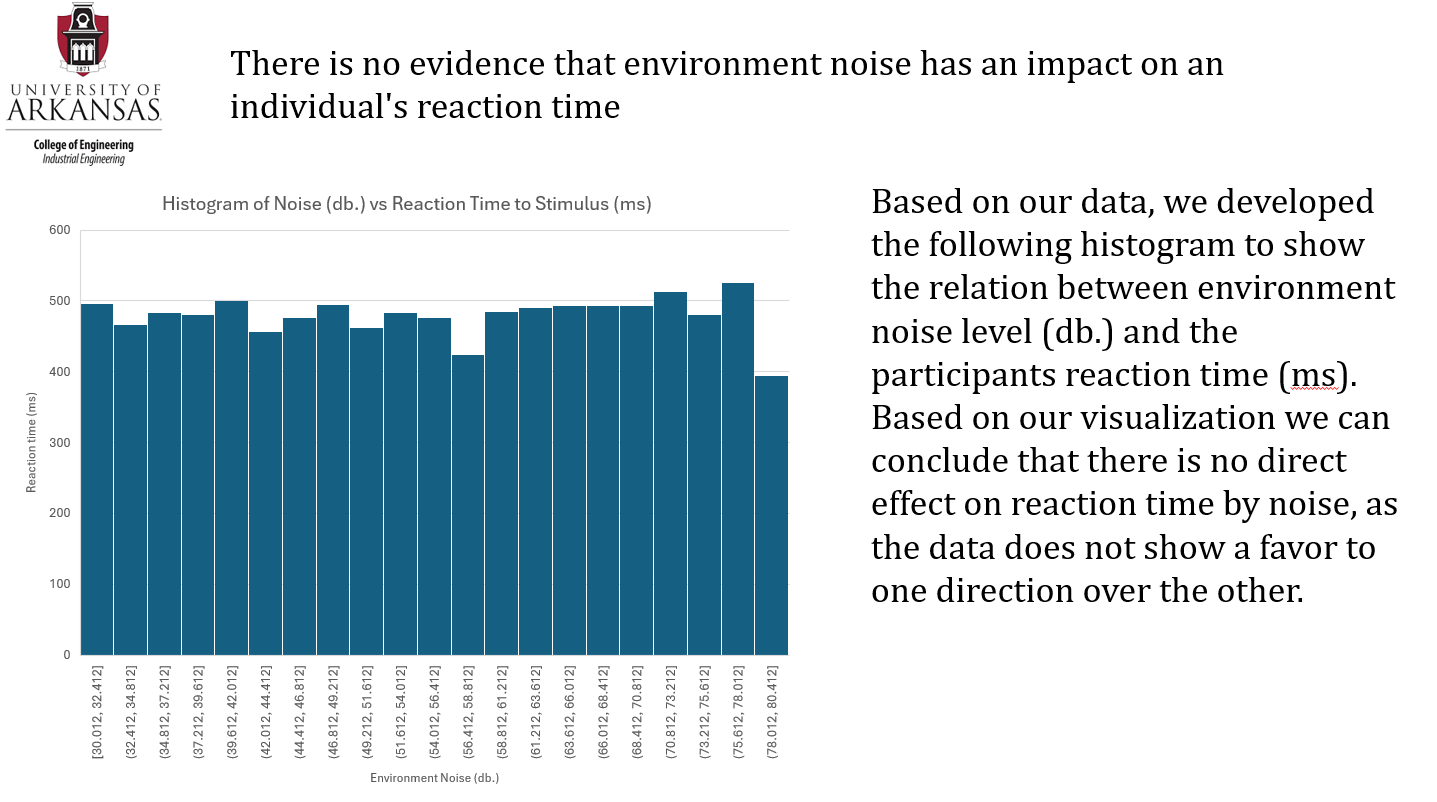
Histogram of reaction time across different noise levels.
Question.
Does environmental noise level influence participants’ reaction time?
Why this question is interesting.
Many work and study environments are noisy, and it is commonly believed that noise slows people down. If noise significantly affected reaction time, it would have implications for designing workplaces and study spaces.
What the visualization shows.
The histogram summarizes the distribution of reaction times under the noise conditions used in the trial. Instead of shifting into slower reaction times at higher noise levels, the distribution remains centered around a similar range with the typical spread of repeated cognitive tasks. This suggests that within the tested noise range, participants maintained reaction speed—likely because task familiarity and attentional control outweighed any distracting effect of background noise.
Participants’ Focus Over Days of the Trial (Time Series)
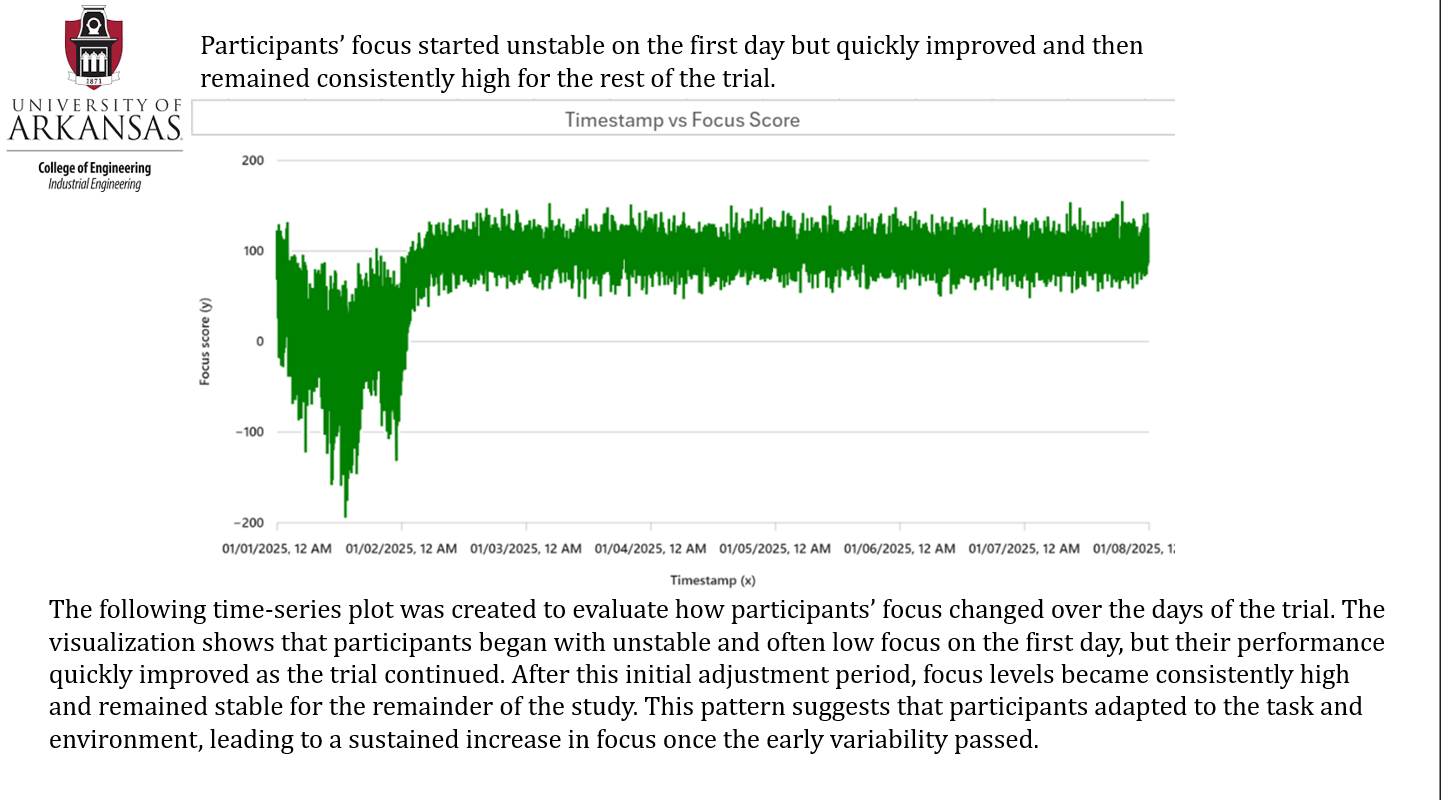
Time series plot of focus score over time.
Question.
How did participants’ focus change over the days of the trial?
Why this question is interesting.
Focus across time helps reveal learning, adaptation, and fatigue. If focus improves and stabilizes, it suggests participants adapt to the task environment and perform more efficiently.
What the visualization shows.
The time series shows a clear adaptation pattern. Early in the trial, focus scores fluctuate sharply, which is typical when participants are new to a task and have not yet developed consistency. Soon after, performance tightens into a stable, high-performing band. This indicates a strong practice effect—repeated exposure reduces cognitive load and increases efficiency. Once stabilized, focus remains high with no meaningful fatigue-related decline across the study period.
Last Mealtime vs Task Completion Time
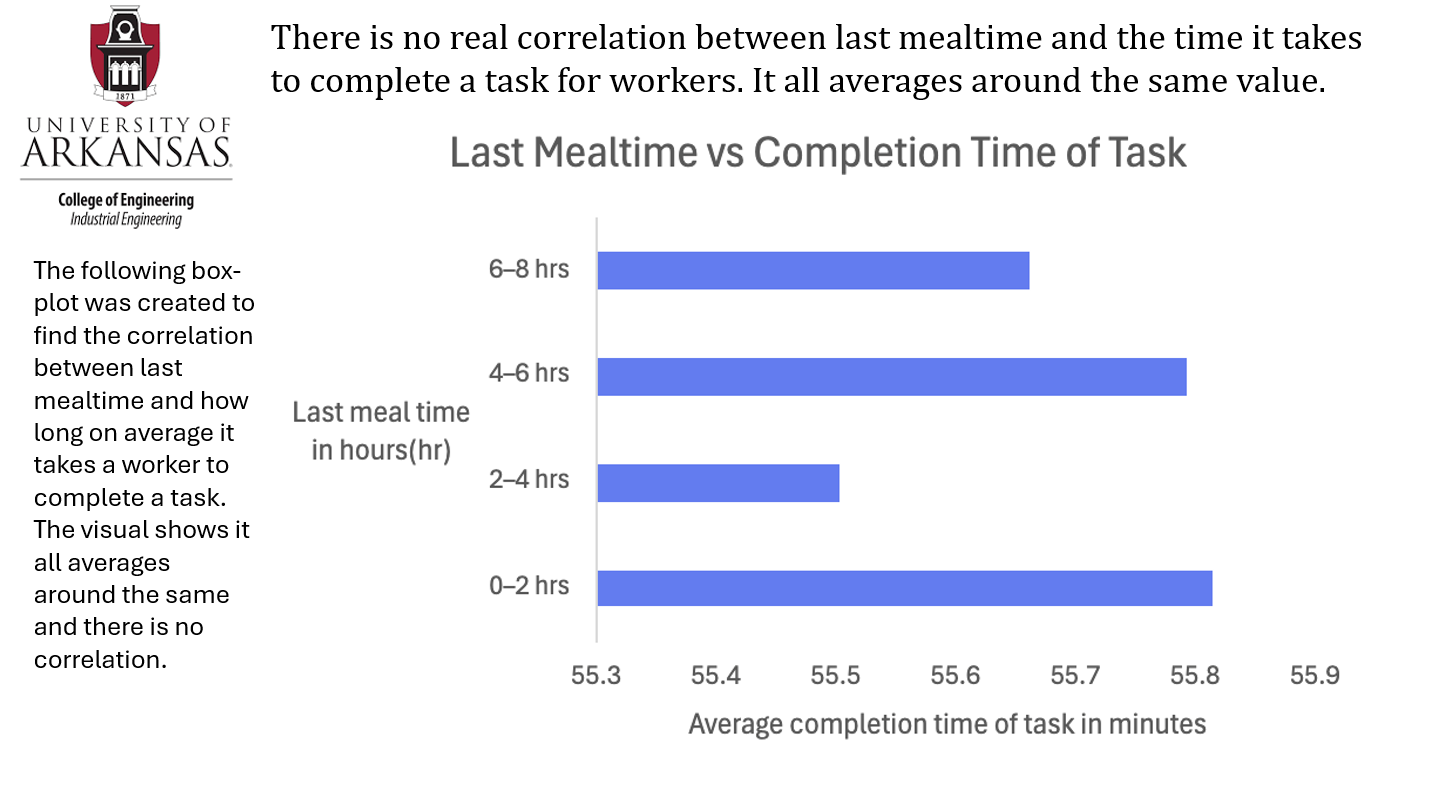
Scatter plot of last mealtime versus task completion time.
Question.
Does the time since participants last ate affect how long it takes them to complete a task?
Why this question is interesting.
People often claim they work better right after eating or that productivity slumps at certain times of day. If time since last meal strongly affected task completion time, it would matter for scheduling demanding work.
What the visualization shows.
The scatter plot shows completion time on the vertical axis and hours since last meal on the horizontal axis. Completion times cluster around a similar range across all values of hours since last meal, with no clear upward or downward trend. This suggests that in this dataset, short-term differences in time since eating did not meaningfully influence task efficiency. Participants performed similarly whether they worked soon after eating or several hours later.